About
I built this because I couldn’t buy it.
OleaDesk started as the tool I needed for my own export business. Everything it does, it does because something in my week was broken.
I grew up in Kairouan, selling CDs and video games, and building websites and small apps for neighbours and local businesses. Being the person who worked out the technology was simply what I did, long before anyone was paying me for it.
That turned into seventeen years of making technology land in places it usually doesn’t. I ran the lead facilitation for a national decentralisation programme during Tunisia’s constitutional transition: twenty-four workshops, one per governorate, with governors, municipal officials and civil society in the same room. I trained forty-eight civil servants alongside the Ministry of Interior. I built and ran a network of more than 2,300 women entrepreneurs across thirteen partner organisations on a USAID-funded programme. I spent two years at the U.S. Embassy in Tunis administering grants and outreach.
In 2020 I co-founded OLYFO, and started exporting Tunisian extra virgin olive oil. Then dates, olives and antipasti, because a buyer who trusts you with one line will listen about the next. It now sells into twelve-plus countries including the UK, the USA, Taiwan and New Zealand, and has taken three international Gold Medals, in London, Paris and New York.
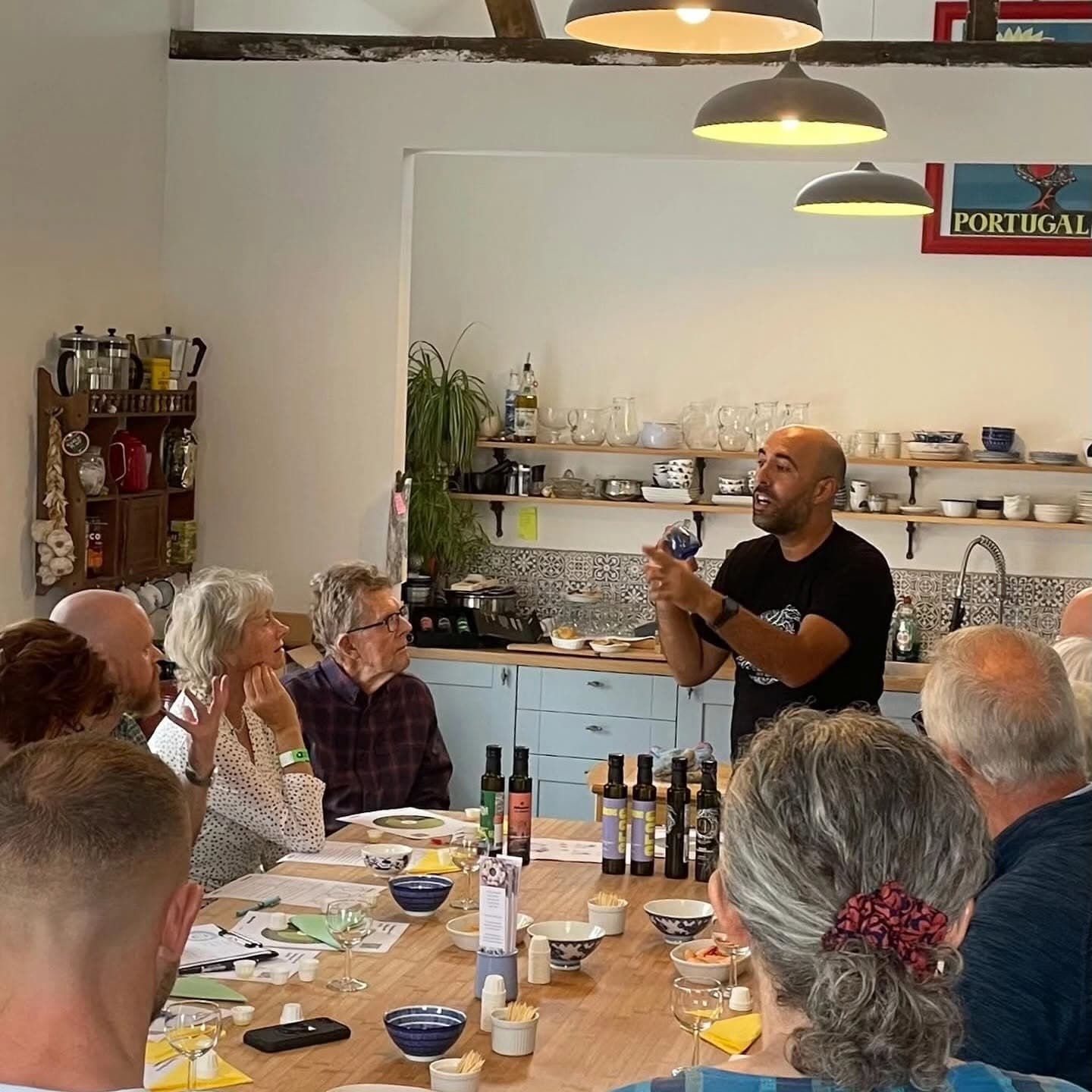
The real problem is distribution, not product
Almost every producer I meet has the same shape of problem, and it is never the product. They have something good. What they do not have is a way into the shelves, the kitchens and the warehouses where it would sell. Getting listed means finding the right importer or distributor for your category and your country, reaching a named person there, and then staying in front of them for months without becoming a nuisance. That is distribution, and it is slow, manual and unglamorous work.
It looks identical from the other side. The UK and US brand owners I talk to are not exporting anything, but they are doing the same job: building a range, finding the accounts that fit it, and chasing decisions that take three conversations and two seasons. Same bottleneck, different direction of travel.
Then I went looking for software, and it wasn’t there
Export is not a generic business. Pricing has to be correct by construction: Incoterms, the whole cost stack, a currency that moved this morning. Documentation is fiscally specific and unforgiving. And a CRM built for software sales does not understand a buyer who orders twice a year in containers.
So I built my own. I already knew how to design systems; what changed is that AI made it possible for one person to build them properly. When I showed the result to other exporters, they didn’t ask polite questions. They asked when they could have it.
The hardest part was never finding companies. It was sales capacity. A small team cannot research markets, write to hundreds of buyers in a voice that sounds like a person, chase the ones who went quiet, and still run the business. That is the gap OleaDesk exists to close, and it is the piece that took longest to get right, because the easy version, the one that just sends, is the version that burns your name.
Why the restraint is the product
I have watched this category promise autonomy and deliver spam. I was never going to point that at my own customers. So OleaDesk never sends without approval, never quotes a price, and never touches anything a company hasn’t published about itself. Those aren’t features I added. They are the reasons it is safe for me to run my own business on it.
I still work as an AI strategy consultant alongside this, designing agent frameworks and running AI adoption programmes, and I hold a Board-conferred designation as Director of AI, Digital and Social Media at UK Research & Consultancy Services. That work and this product feed each other: I teach organisations how to adopt AI without losing control of it, and then I have to live by the same rule in my own software.
The numbers I don’t print
I run OleaDesk on my own export business, so I know exactly what it does for me. I am not publishing those figures yet. They come from one company selling one thing into a handful of markets, and a number that small says more about my week than about what it would do for yours. When there is enough of it to mean something, it goes up here with the method printed underneath so you can argue with it.
What you will not find here is a customer count, a logo wall or a testimonial from a person who does not exist. I have been sold to by all three and it is the reason a claim on a software site is worth nothing by default. When there are customers whose results are worth showing you, they will appear here with their names on them, with their permission, and with the same explanation of how the number was counted.
The other honest answer is that your market is not mine. Olive oil into the UK is not the same job as speciality coffee into Germany, and anyone quoting you their own reply rate as though it were a forecast of yours is guessing. That is the whole reason the trial exists and asks for no card: you should see what it finds in your market before you decide anything.
Where this goes
A food show costs me at least $15,000 by the time the stand, the flights, the samples and the days away are counted. Plenty of good producers simply cannot do that, and the ones who can still go quiet for the other eleven months. If you make something worth selling and the bottleneck is getting it in front of the people who would actually buy it, that is the problem I am trying to solve. It is also the one I had myself.
We are a small team. I answer my own email.
What we stand for
Three things, and each one is something the software does rather than something we say.
Your mail is yours. It is stored on your own computer, not on our servers. It is yours to read, search and export, online or not, whether or not you keep paying us. We are not building a business on holding your correspondence hostage.
Nothing goes out without you. Not one message reaches a buyer until you have read it and said yes. There is no setting that changes that, because it is not a setting; it is the shape of the product. And your agent never quotes a price or agrees terms: the moment a buyer asks, it steps back and hands you the conversation.
A person stays in charge. AI is moving very fast and a great deal of it is being built to take the human out of the loop. We think that is the wrong bet for a business where your name and your relationships are the asset. Ours does the reading, the finding and the drafting: the work that eats your week. The judgement stays yours.